Namibia
Namibia - The Earth Masterpiece
If you’ve ever wondered what it’s like to travel to another planet, this destination is the closest to it. Wild, huge and untouched.
Located along the Atlantic coast, it is the fifth largest country in Africa. It is bordered by Angola and Zambia to the north, Botswana to the east and South Africa to the south.
There are few untouched and precious places left on earth like Namibia. The possibilities for adventure here are enormous. A land of contrasts and insane landscapes, it offers a fascinating blend of culture and European influences in its art, excellent local and international cuisine and architecture. Miles of open and unexplored space in every direction.


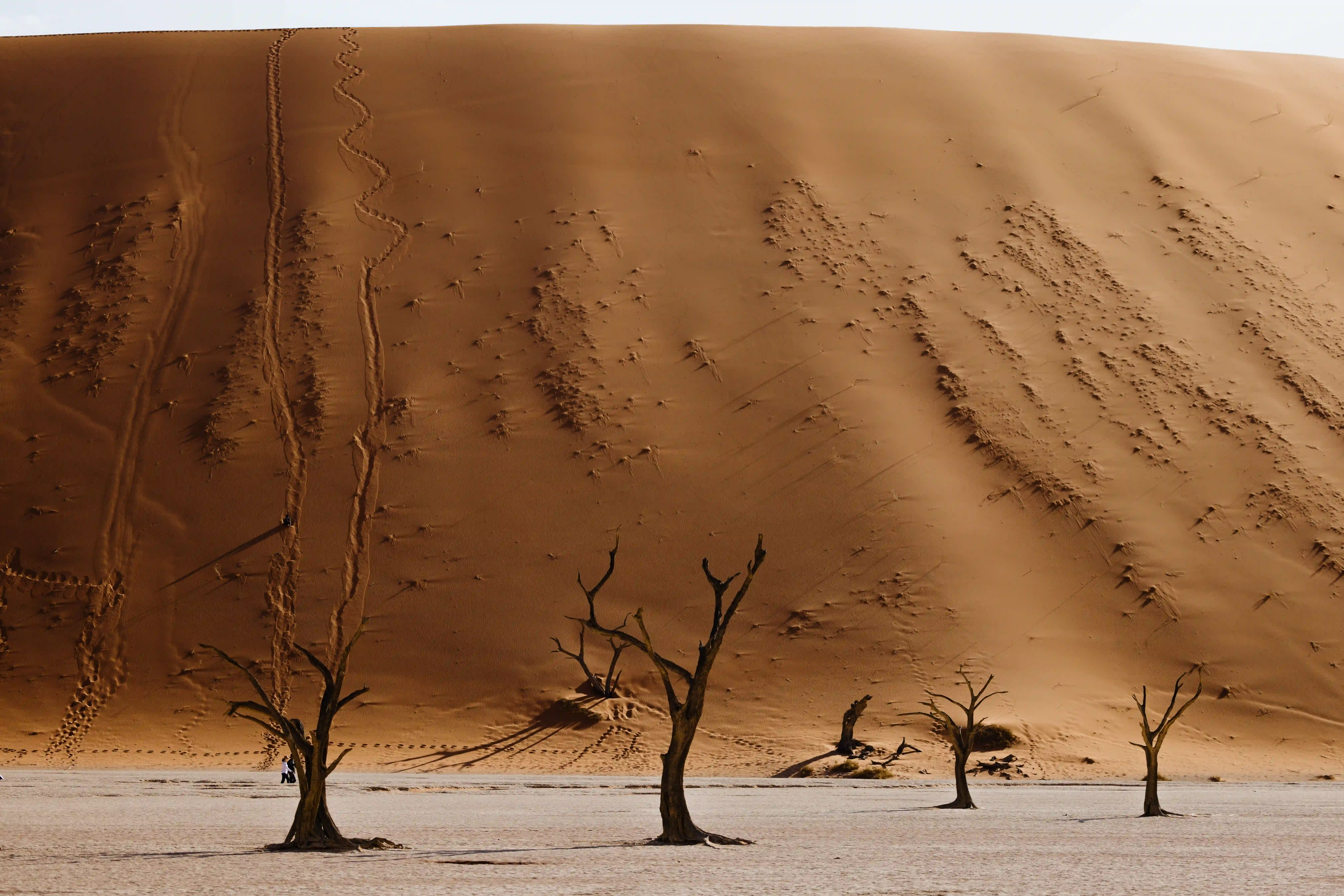
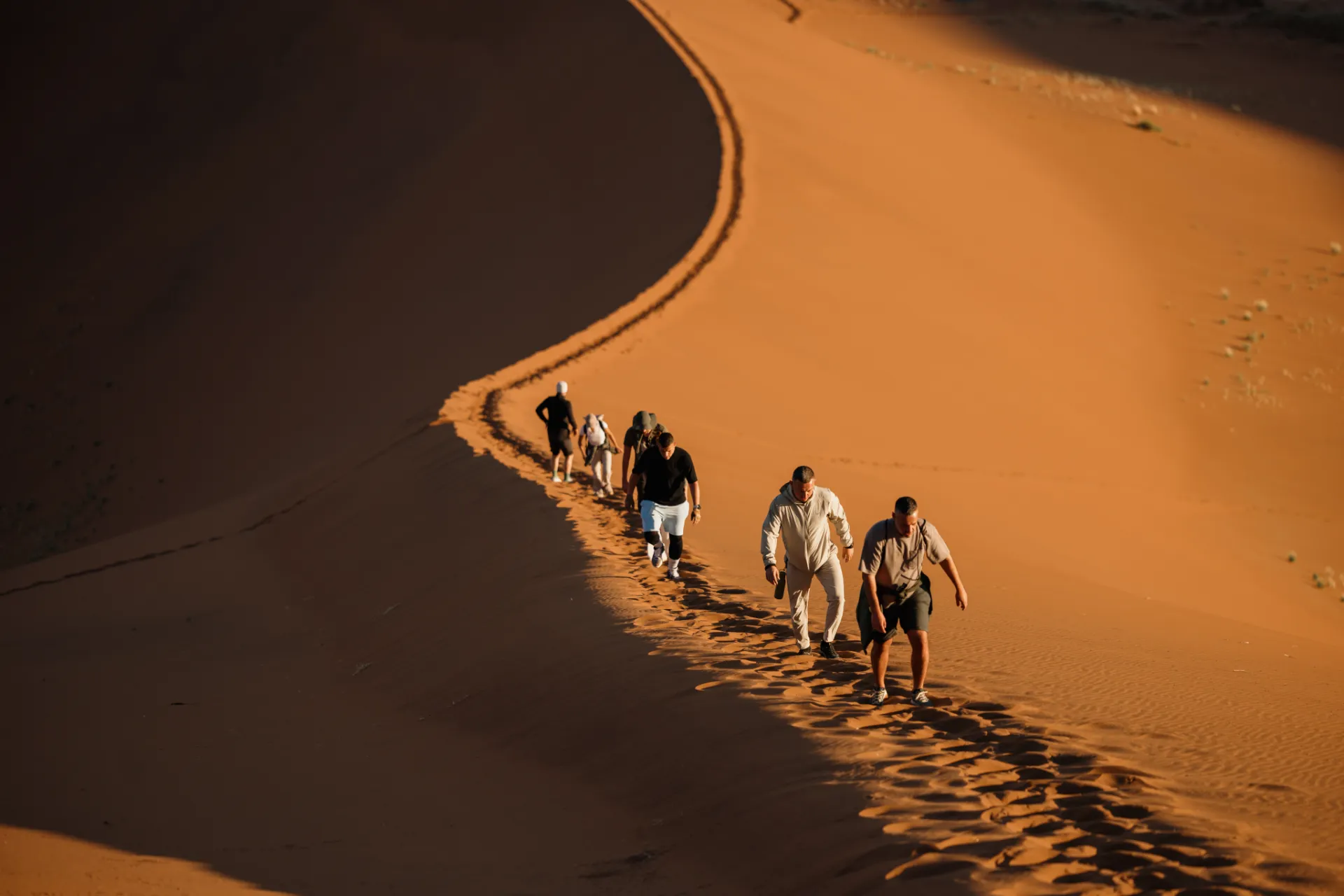
Sossusvlei
It is a vessel of salt and clay surrounded by towering red dunes in the southern part of the Namib Desert, within the Namib-Naukluft National Park in Namibia.

Etosha National Park
It is a huge cavity in the ground where water can collect or where a salt deposit remains after the water evaporates. The 120-kilometer-long dry lakebed and its surroundings are protected as Etosha National Park, Namibia's second-largest wildlife park, covering 22,270 square kilometers.

Spitzkoppe
Spitzkoppe, often referred to as the "African Matterhorn," is a dramatic granite formation that emerges from the flat desert plain of Namibia. Its rocks, which are over 700 million years old, attract hikers, photographers and nature lovers from all over the world.

Wild Camping
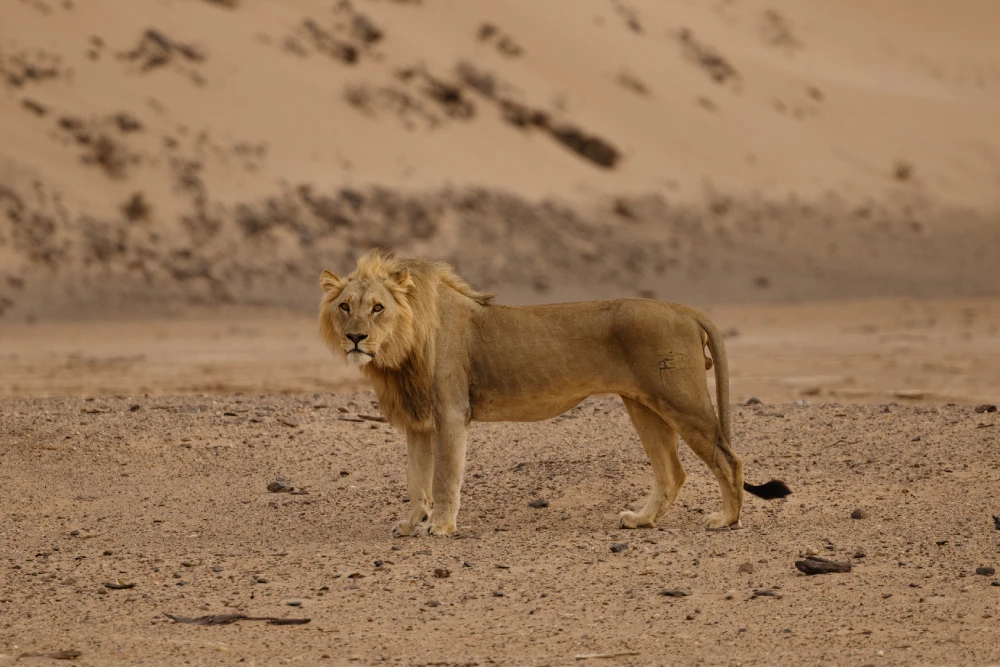
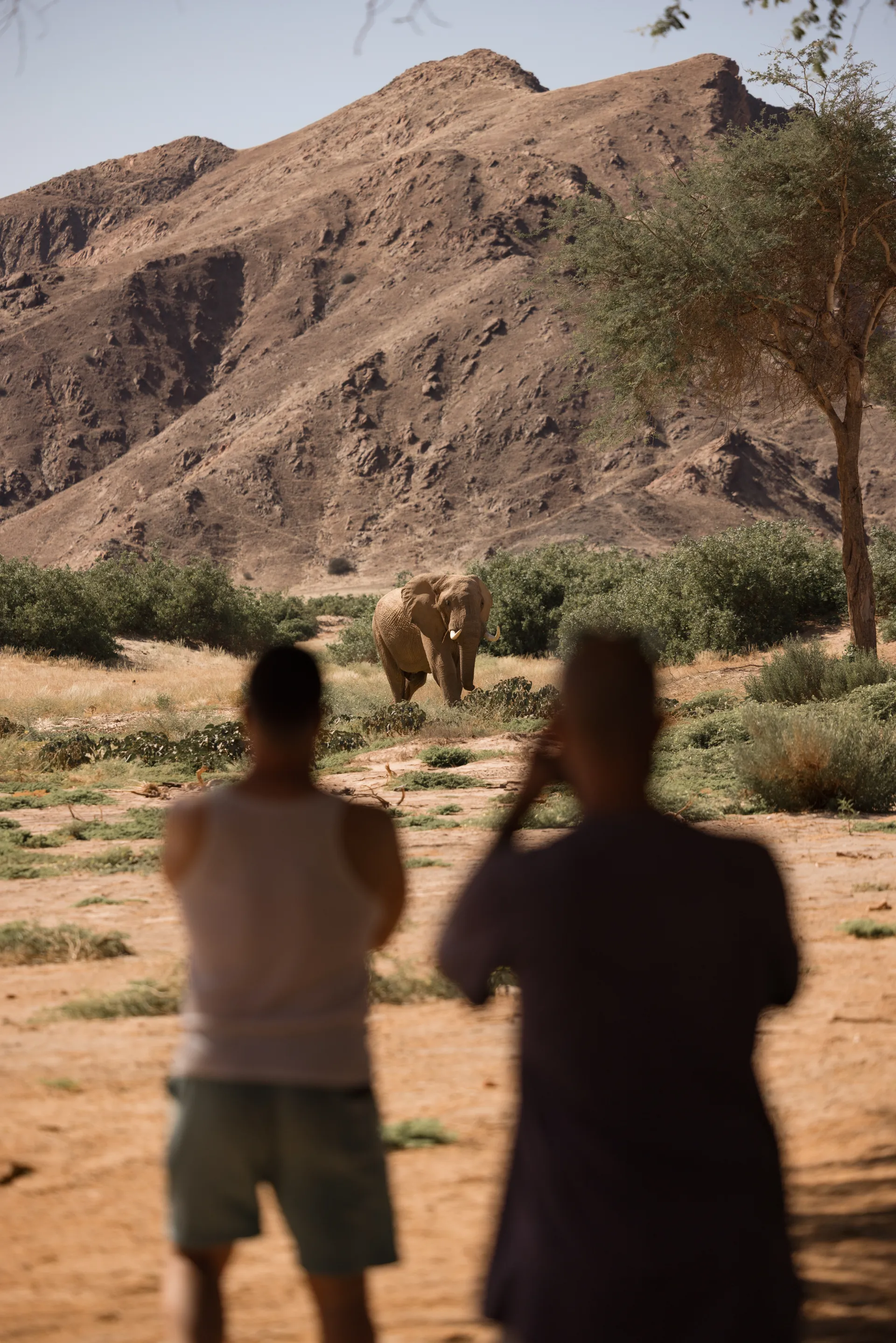
Wild camping along the Hoanib River bed provides a rare opportunity to camp in the middle of one of the harshest but most beautiful desert wilderness in the world. This dry river, which occasionally comes to life during the rainy seasons, is known for its incredible encounters with desert elephants, lions and giraffes.
Kenya - 03/02/2026 8 days / 1.990 EUR
Namibia - The Earth Masterpiece
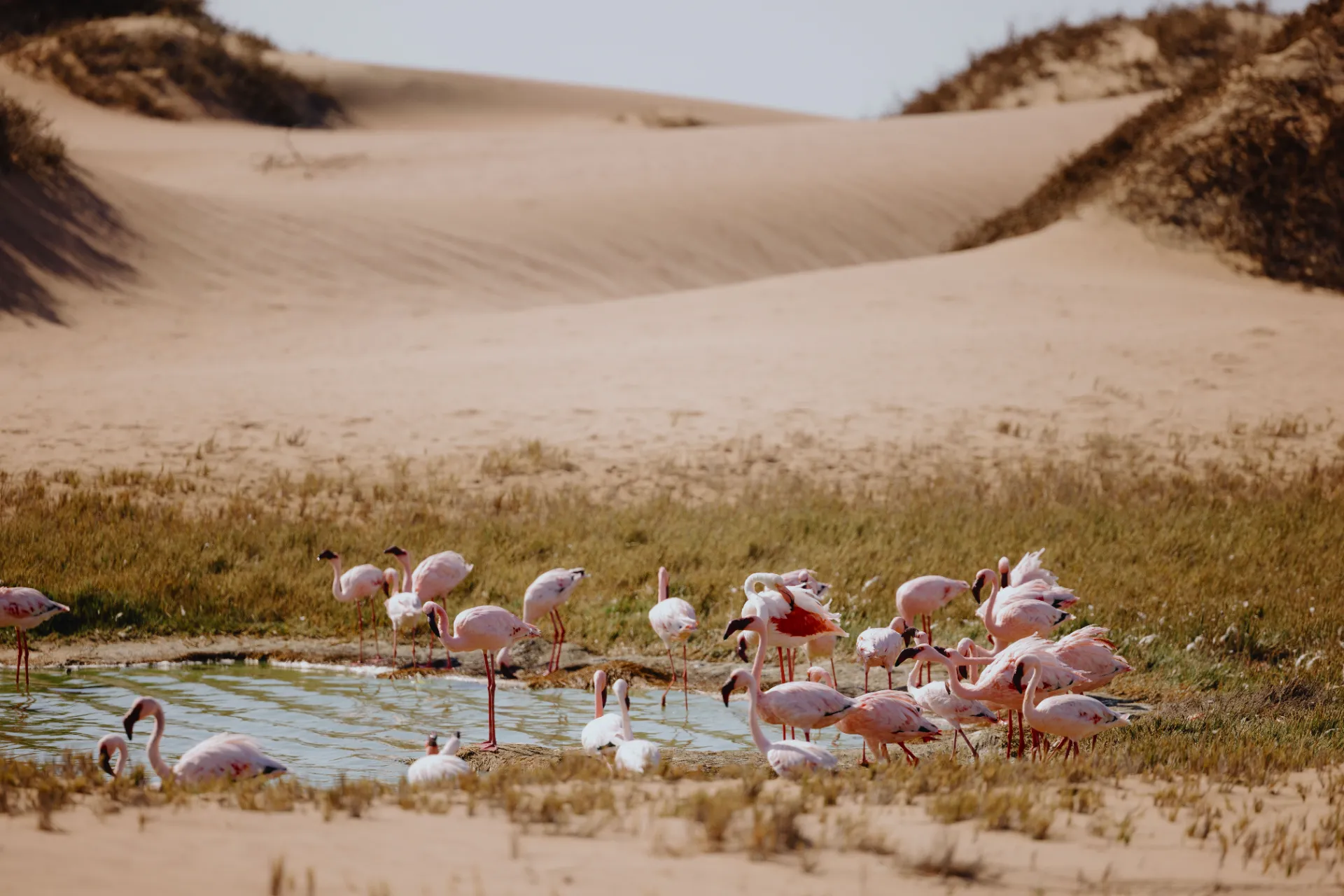
With over 300 days of sunshine, Namibia is a good destination all year round, with fewer extreme seasonal changes than other parts of southern Africa. It has a semi-desert climate, with warm days and cold nights. It is home to the last of the desert elephants, black rhinos, and the few remaining lions adapted to life in the desert.
An adventurous and photographic paradise, this country offers a wealth of interests.
We present just some of the most famous parks of this country that we visit on our specially created self-drive safari adventures.
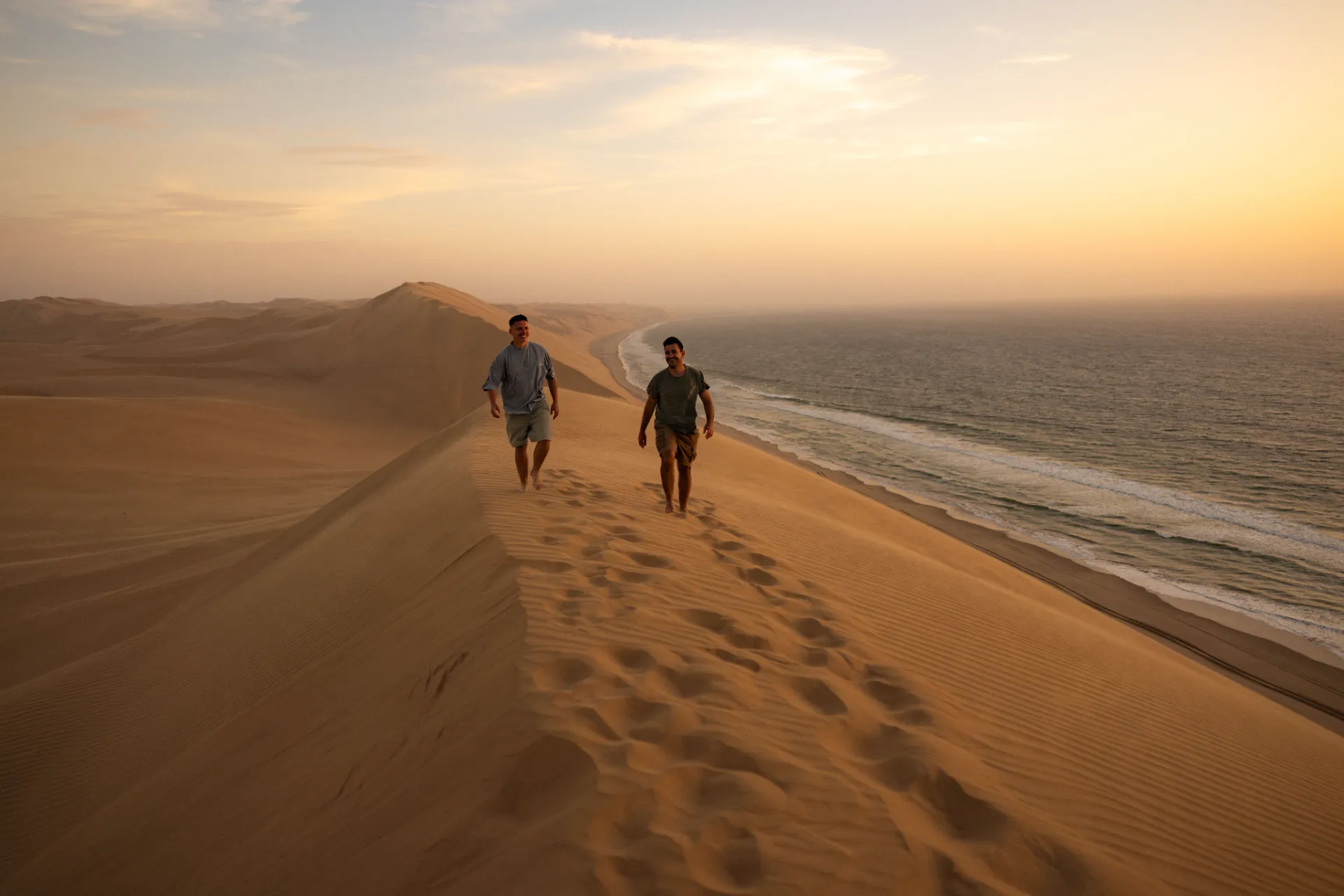
The Skeleton Coast is the place where the Atlantic Ocean meets the dunes of the Namib Desert. Stretching along the northwest coast of the country, this unique place is characterized by huge dunes, shipwrecks, and 120 rugged desert landscapes that meet the cold waters of the Atlantic. The name ‘Skeleton Coast’ derives from the numerous shipwrecks scattered along the coast, which adds to its mysterious atmosphere. Cape Cross is one of the largest seal colonies in the world.
Sossusvlei, also known as Sosus Vlei, is a vessel of salt and clay surrounded by towering red dunes in the southern part of the Namib Desert, within the Namib-Naukluft National Park in Namibia. The name ‘Sossusvlei’ is often used to refer to a wider area, including other nearby vlei such as Deadvlei and other tall dunes. These sights are one of the main attractions for visitors to Namibia.
The oldest desert in the world, the Namib, covers a fifth of the country’s land area and is over 80 million years old.
Damaraland, a mountainous region, an icon of Namibia, is home to many wildlife adapted to the desert environment, such as elephants, rhinos, zebras and lions, which manage to survive in this almost hostile environment.
An unavoidable attraction is the picturesque Brandberg, Namibia’s highest mountain, which preserves thousands of years old ancient hand-painted paintings on the rocks.
The rocky outcrops of Twyfelfontein abound in exquisite artistic drawings of the San tribe, they are considered one of the best-preserved hand-carved paintings on the continent. A visit to the Petrified Forest, which dates back millions of years, experiences an impressive landscape with gigantic fossilized trees.
The Hoanib River, The Hoanib is one of the 12 seasonal rivers in western Namibia, formerly the border between northern Damaraland and Kaokoland. With a length of 27 kilometers, this area has a low population density, an oasis in a river valley and a high population of wildlife such as Hoarusiba, making it one of the last true wilderness areas in Namibia. This is one of the few habitats of desert elephants, with characteristic high rocks made of eroded stone (up to 10 m in height). Matimba has chosen this area for wild camping, where we will spend 4 days on our tours, with our own chef and sleeping in tents placed on our jeeps.
Fish River Canyon is located in the south and is the largest canyon in Africa. This impressive natural formation is one of the most visited and popular destinations in Namibia. It stretches over 160 km in length with a width that reaches up to 27 km and a depth that in some places reaches 550 m.
Etosha, the pearl of Namibia when it comes to safari and wildlife. Etosha Pan is a large salt pan, which forms part of the Cuvelai-Etosha basin in northern Namibia. It is a huge cavity in the ground where water can collect or where a salt deposit remains after the water evaporates. The 120-kilometer-long dry lakebed and its surroundings are protected as Etosha National Park, Namibia’s second-largest wildlife park, covering 22,270 square kilometers. The pan is mostly dry, but after heavy rains it is flooded with a thin layer of water, which is heavily salted with mineral deposits on the surface.
There are also many private reserves where safaris are led with local guides in open vehicles, who use their private properties for off-road driving.
Some of the best are Erindi Game Reserve, Okonjima Reserve, Waterberg.
On our travels, we always end the tour in one of them. We leave the best safari experiences for last with a dose of luxury that these reserves and accommodations provide.
Is it safe in Namibia?
Namibia is a reliable destination for adventurers and nature lovers with extremely spectacular scenery and a lower risk of serious incidents than in many other African countries. However, preparation, situational awareness and respect for local rules are the key to a safe and enjoyable trip.
Do you need a vaccine?
A vaccine is not required to travel to Namibia.
Is a visa required?
A visa is required to travel to Namibia. If you are a citizen of Serbia, you must send all the necessary documents to Vienna. The procedure takes about 10 working days on average. EU citizens are required to obtain a visa upon entry into Namibia.
Namibia - The Earth Masterpiece
If you are interested in traveling to Namibia, send us an inquiry